Phantom Pro
Phantom Pro (2022–2025) begins with Mosul, a city occupied by ISIS in 2014 and devastated during its liberation, but its subject is the image itself: how images circulate, operate, and acquire agency within the technological infrastructures of contemporary warfare and reconstruction.
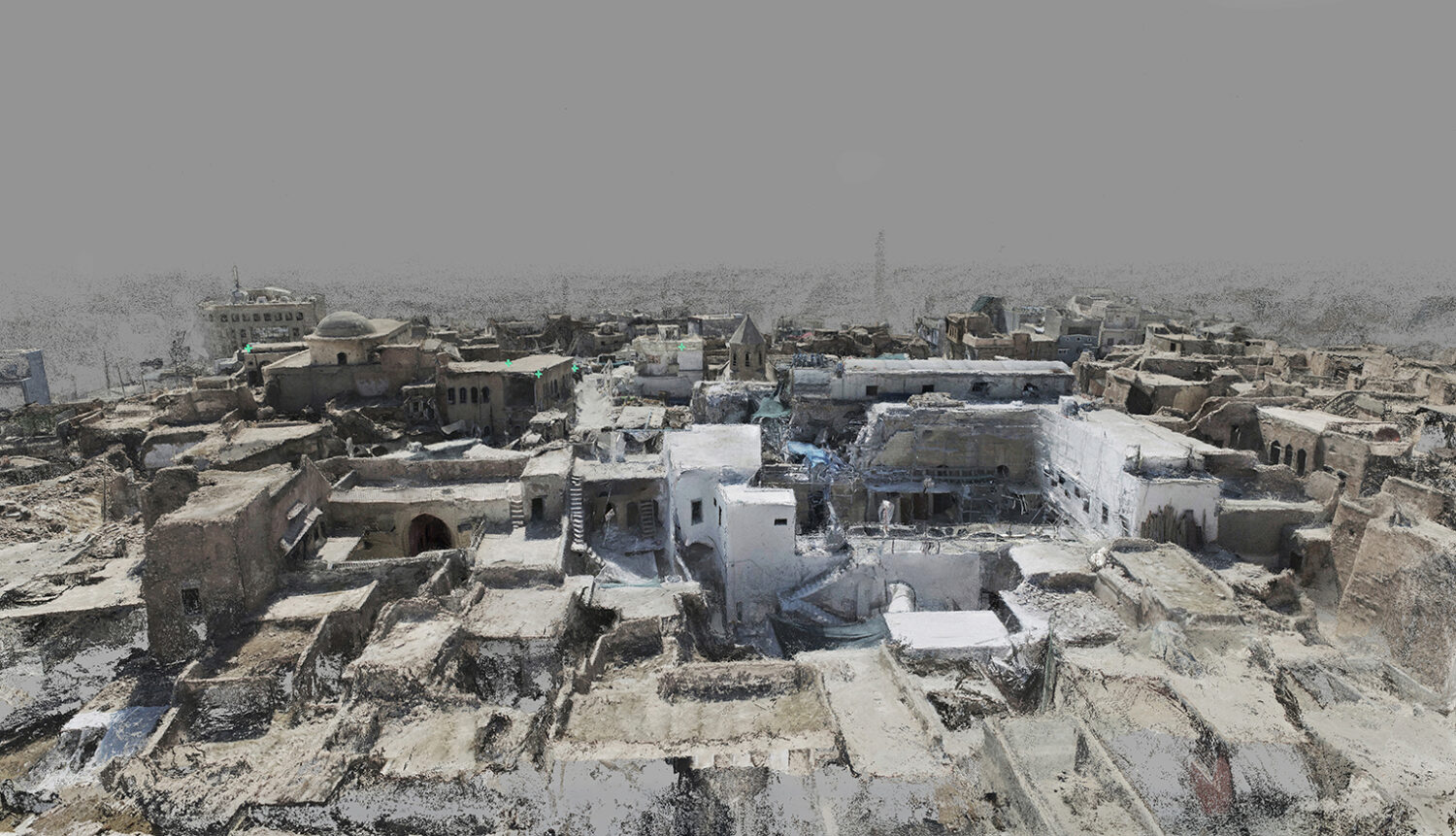
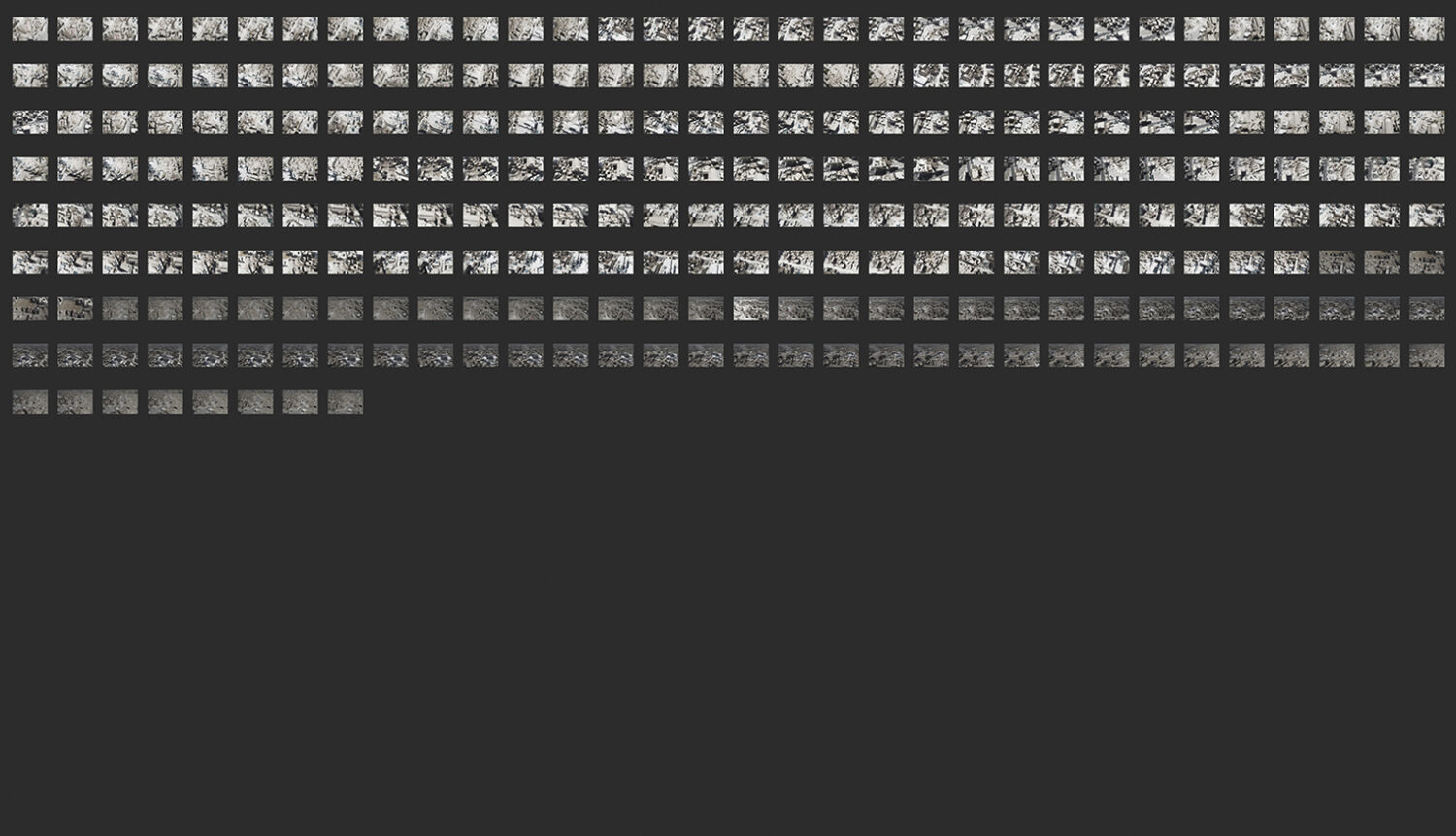
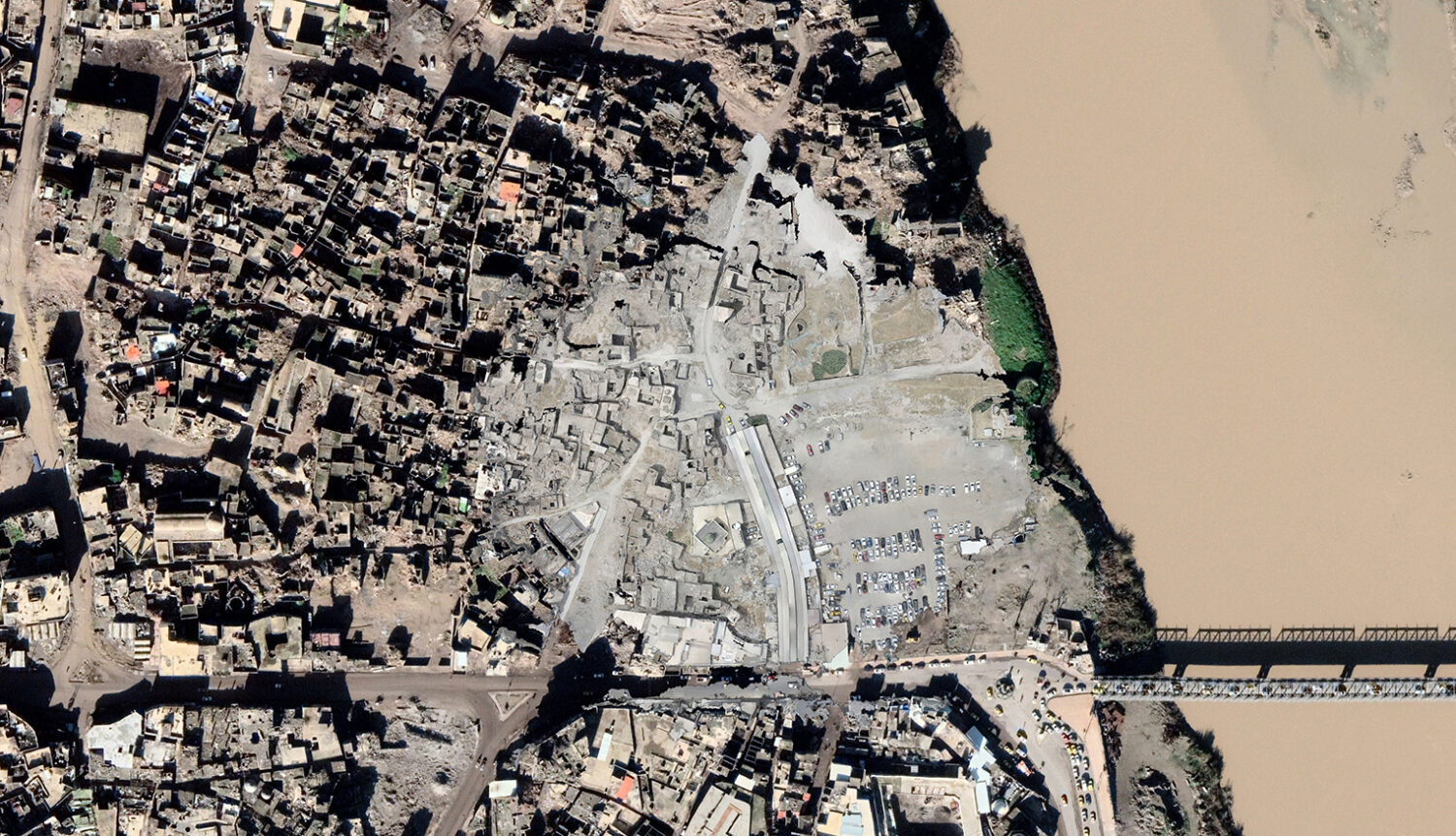
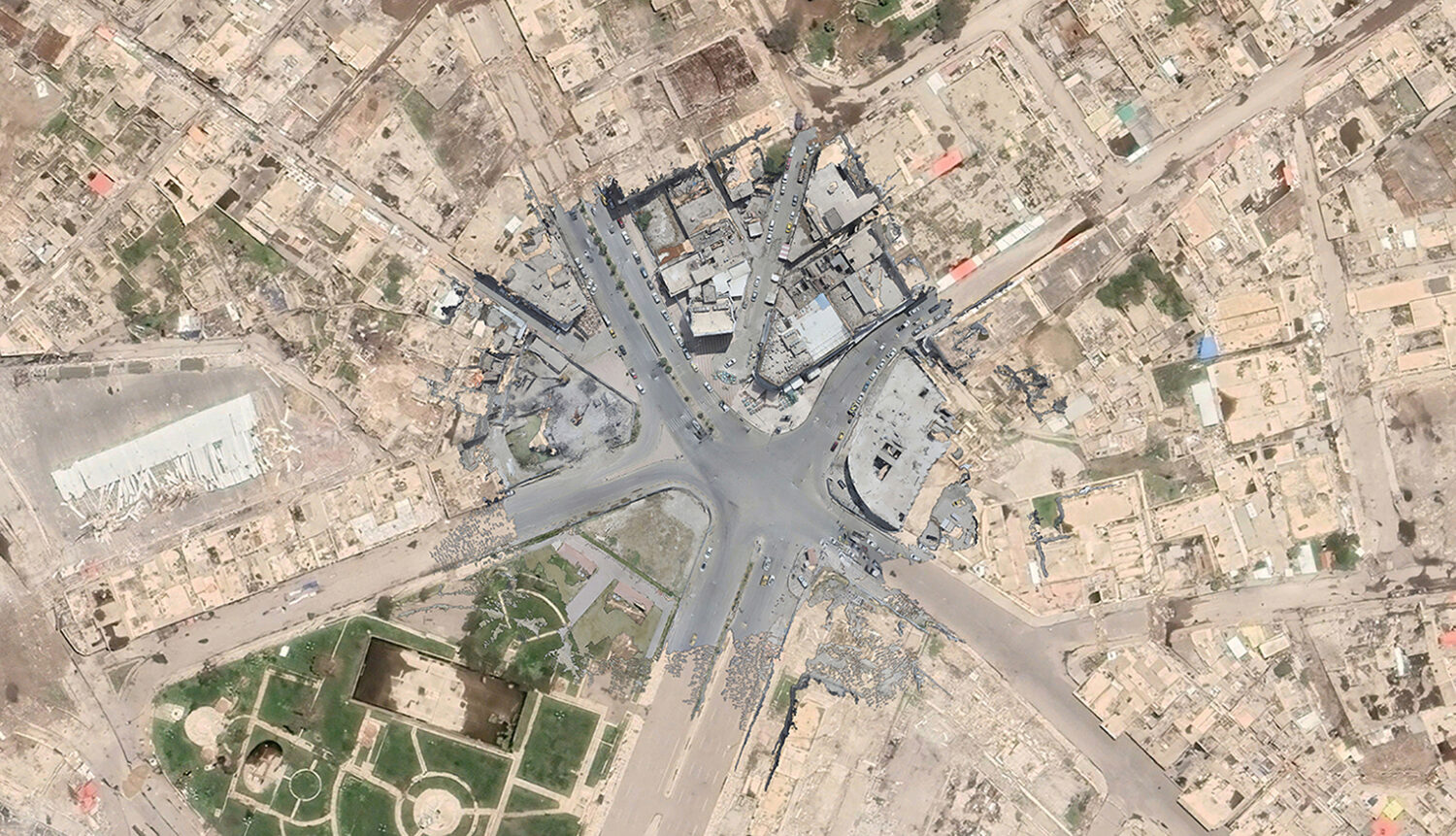
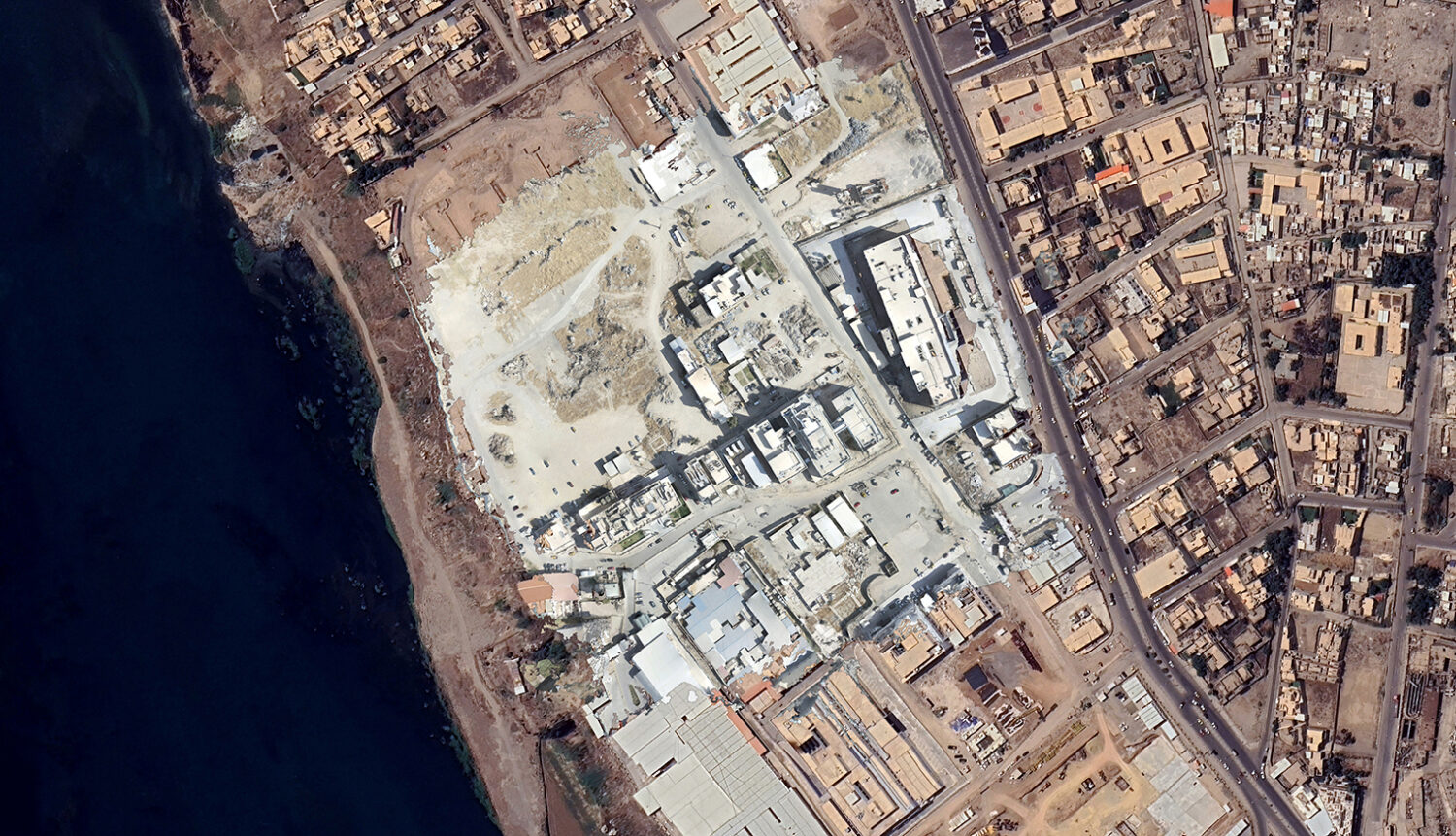
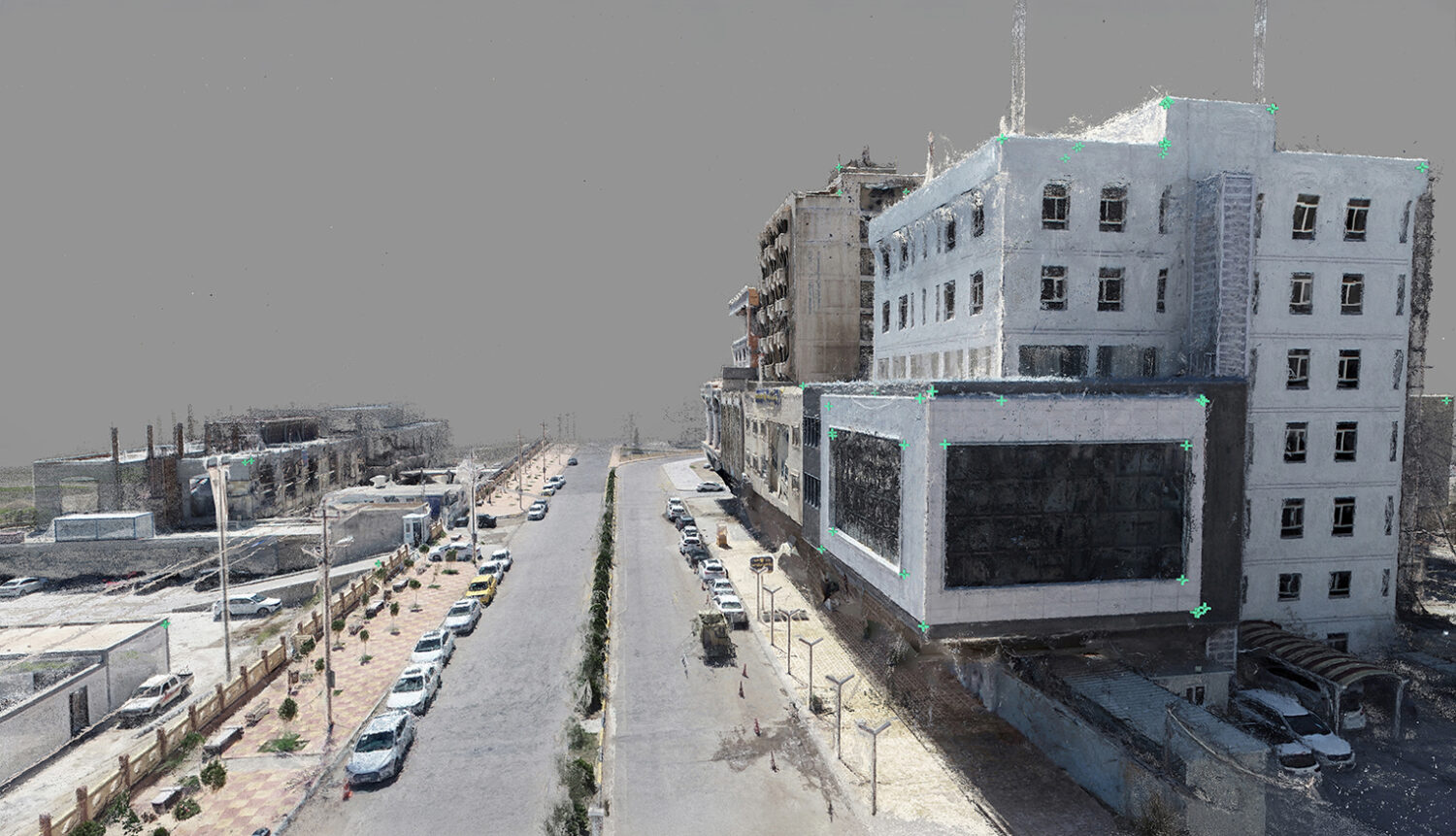
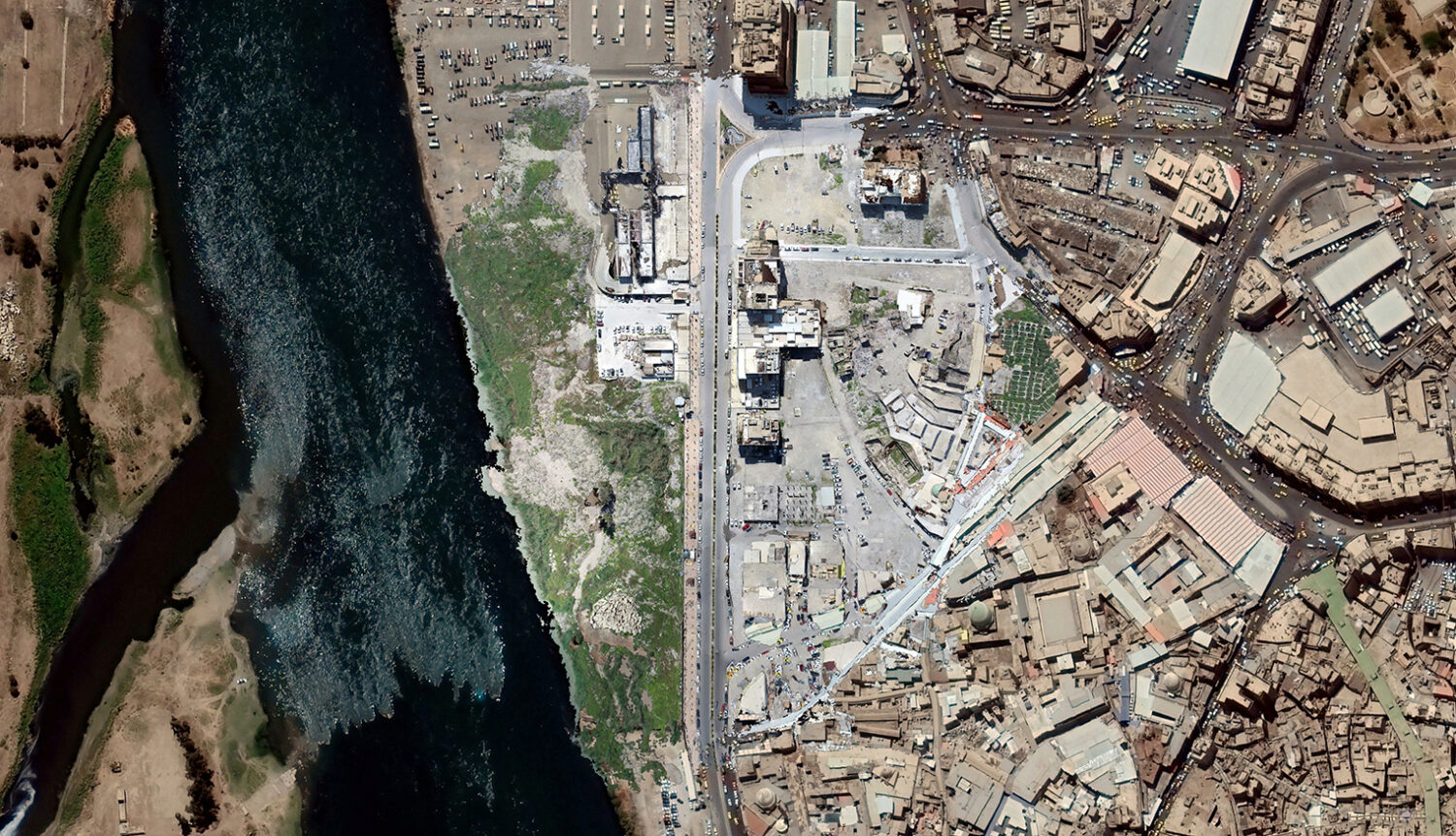
The project brings together consumer drone photography and mapping techniques derived from military targeting systems. Images collected remotely by local drone pilot Ayar Rasool are transformed into three-dimensional models and integrated into digital mapping platforms, where they operate as photographs, datasets, models, and geographic coordinates. In this form, images become active components of the systems through which territory is organised, measured, and governed.
The work is structured around the concept of Ṭabaqāt (layers), through which landscape and image are understood as stratified accumulations of history rather than fixed records. Each layer conceals, transforms, and reactivates what precedes it, producing new ways of encountering the past. History does not disappear; it is continually recalculated, rewritten, and made operational.
This relationship between image and territory is complicated by consumer drone technologies, which have blurred the boundaries between military and civilian applications. During the Battle of Mosul in 2016, ISIS became the first organisation to weaponise commercially available drones at scale, while the same platforms expanded civilian applications of photogrammetry—a technology rooted in military reconnaissance that now underpins commercial mapping and reconstruction. Across these contexts, the image moves between evidence, commodity, infrastructure, and target.
Drawing on the my three decades of engagement with northern Iraq, Phantom Pro does not seek to produce a definitive account of conflict or recovery. Instead, it examines the conditions through which images participate in both. The work proposes the image-object as a form that exceeds representation: one that locates, measures, classifies, and persists within networked systems long after the moment of capture.
Phantom Pro therefore asks not simply what an image represents, but what an image does: how it produces knowledge, governance, and memory, and how the layered histories of Mosul persist within the technical infrastructures through which the city is mapped, reconstructed, and remembered.